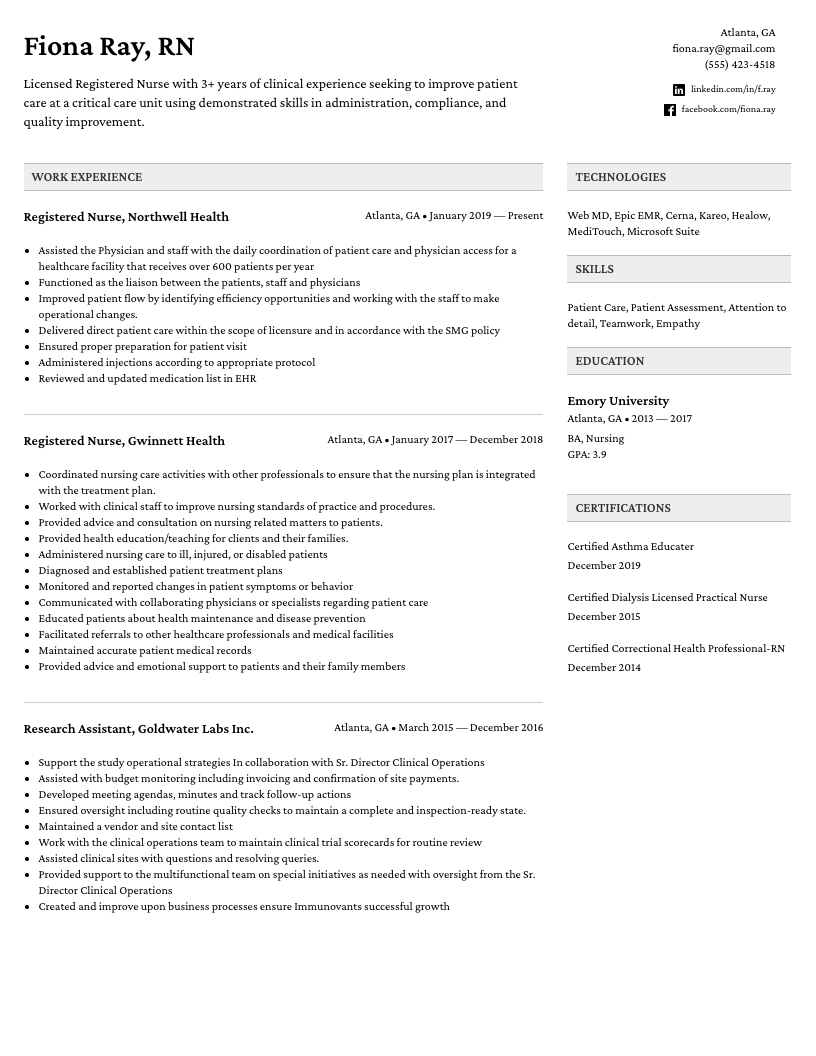
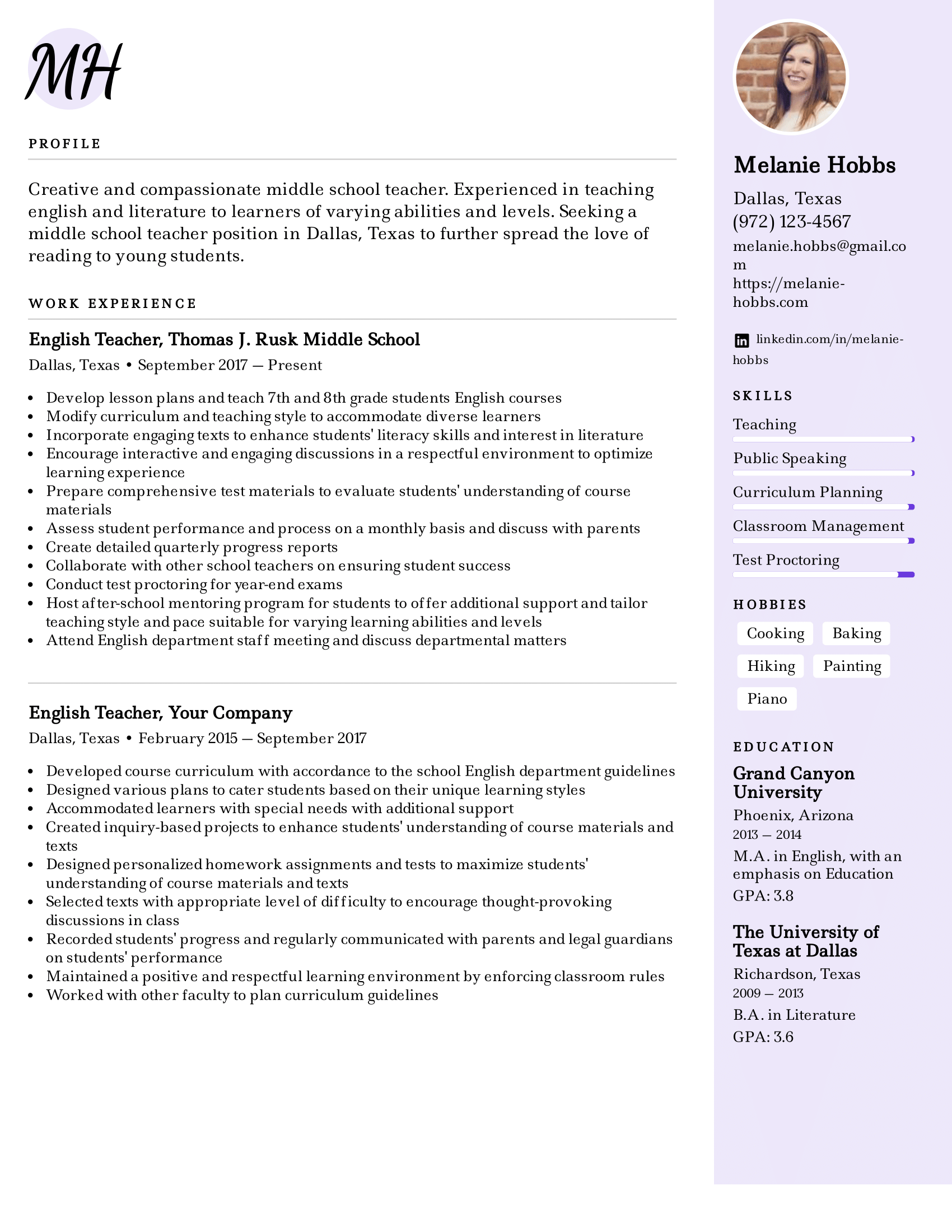
Ensure your resume is up to date and ready to go for your next interview!



Personal financial advisors provide advice on investments, insurance, mortgages, college savings, estate planning, taxes, and retirement to help individuals manage their finances.
See our list of over 350 action verbs to find more.
Financial Advisors not only need to be good with numbers, but also with their clients. Therefore, skills like communication and persistence are vital.
Financial Advisors require a bachelor’s degree in finance, economics, accounting, business, mathematics, or law. Certifications or even a master’s degree can greatly improve your chances of being hired and for attracting wealthier clientele.
Some certifications include the Certified Financial Planner (CFP) certification by The Certified Financial Planner Board of Standards
Personal Advisors who directly buy or sell stocks, bonds, or insurance policies, or who provide specific investment advice require licensure. Some licenses include:
Requirements for licensure vary by state but generally involve the following:
Job Outlook
The job outlook for Financial Advisor is growing at 7% per year, which is considered to be faster than average. In 2018 there were 271,700 jobs available.
Average Salary
Financial Advisors make $87,850 per year on average. However, salaries could be as high as $208,000 depending on experience, clientele, and location.
Top Paying Salaries by State
Search for Financial Advisor Jobs
Learn how to format contact information on your resume and what information to share with the hiring manager.
Read this how-to guideDon't know whether you should write a one-page or two-page resume? Find out when it is appropriate to write a two-page resume and learn how to write it correctly.
Read this how-to guideIn this guide, we will cover everything you need to know about including references on a resume, from how to format them to how to know when they should be included at all.
Read this how-to guideYour work experience is a summary of all your hard work, dedication and achievements over the years. Here's how to do justice to your work history.
Read this how-to guideColors on a resume could be a major advantage if used correctly. Learn everything you need to know about color on your resume to win the interview.
Read this career-advice articleLearn essential tips from resume examples to make the right decision on including your gpa in your resume, especially if you have a low GPA.
Read this career-advice articleMany job seekers get stuck in this interview question. Yes, it can be hard to identify your own strengths and weaknesses, but if you focus on a few key points and provide relevant examples, you'll do just fine.
Read this career-advice articleHow you organize your resume matters. The layout and formatting of a resume can have a huge impact on a hiring manager’s first impression. Plus, the layout helps to guide the employer’s eye around the resume to the most important information! In this guide, we will cover everything you need to know about resume organization and layouts.
Read this career-advice article